About Us
Grounded in faith, dedicated to restoring hope and dignity through selfless action.

Driven by Selfless Service.
Powered Entirely by Volunteers.
The Aum Waheguru Seva Mission is a registered non-profit organization run completely by dedicated volunteers. Operating without corporate backing, business assets, or institutional endowments, our humanitarian work relies solely on the collective generosity of compassionate supporters like you.
Our foundation is built upon the timeless principle of Seva—the Sanskrit word for selfless service. This sacred practice is an essential pillar of spiritual growth, beautifully passed down through the divine teachings of Shree 108 Brahmalin Swami Mehar Singh Ji Maharaj.
Through this platform, we invite you to explore our grassroots initiatives and witness the direct impact of your support. Together, we provide vital food security and life-sustaining monthly supplies to widows and families navigating extreme hardship.
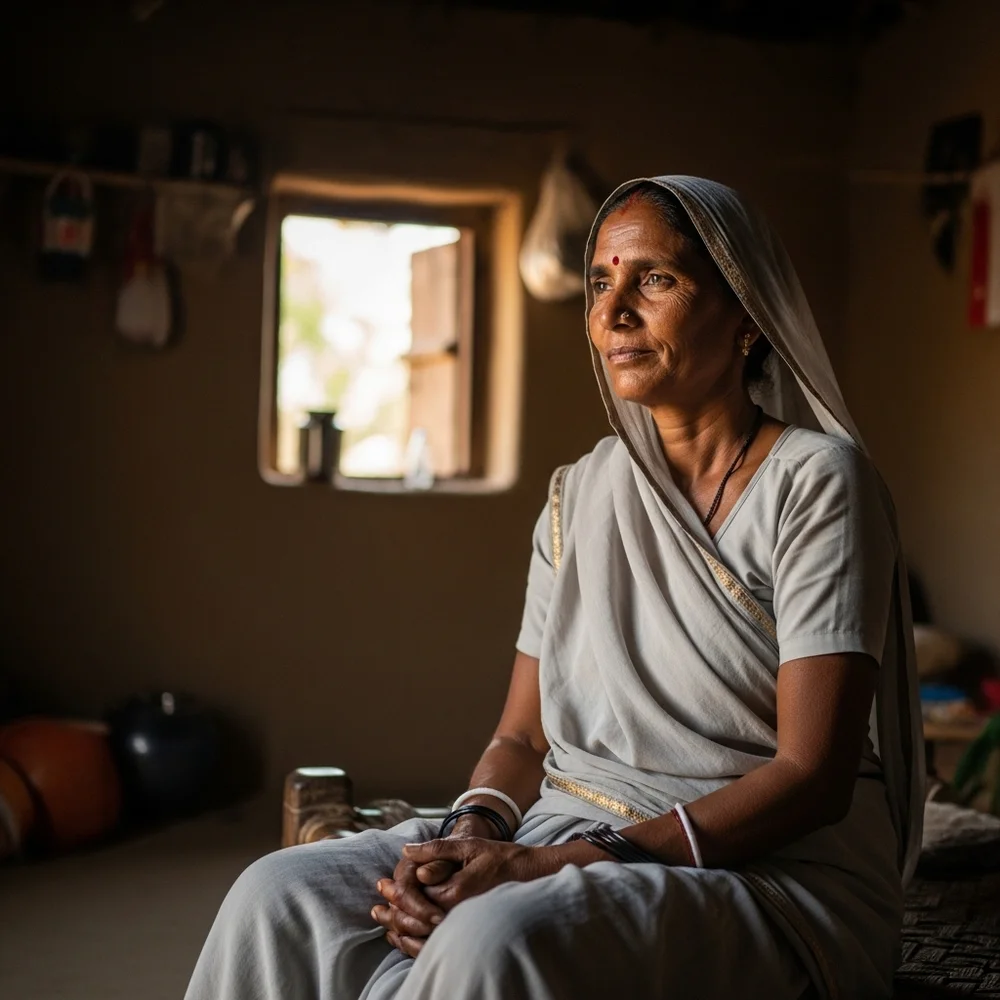
The Invisible Crisis: Why We Focus on Widows
In many traditional societies across developing nations, the loss of a husband extends far beyond emotional grief—it often results in a "social death." For countless women, widowhood strips away their societal standing, relegating them to the absolute margins of community life where they endure systemic discrimination, isolation, and severe hardship.
Left Without Protection
In rigid patriarchal structures, a woman's societal security is often tied entirely to her father or husband. Left without a male counterpart, widows find themselves in a precarious legal and social limbo.
Severe Social Stigma
Across various cultures, widows are unjustly blamed for their husband’s passing. In extreme cases, they face harmful accusations of bringing bad fortune, subjecting them to profound shame and isolation.
Systemic Exploitation
Stripped of their family status, these women frequently become outcasts, leaving them highly vulnerable to physical, psychological, and financial abuse.
Complete Abandonment
Their grief is deeply compounded by immediate eviction from family homes and communities, forcing them into sudden destitution, hunger, and a loss of personal honor.
India’s Widows: Confronting Systemic Social Exclusion
For millions of women across India, losing a husband marks the beginning of severe societal banishment. We work directly on the ground to dismantle this systemic exclusion, replacing isolation with a safe, supportive, and loving community.
The Reality in India: Dehumanization and Stigma
The crisis confronting widows in India extends far beyond economic hardship; it strikes at the very core of human dignity. In many traditional settings, a woman's societal value is completely stripped away upon the death of her husband, reducing her from a respected family member to a marginalized outcast.
This systematic dehumanization is deeply woven into cultural practices and daily language:
The Erasure of Identity
Upon losing their husbands, many women experience a complete erasure of their personal identity. They are often treated as objects rather than individuals, facing a form of social exile that strips them of respect and bodily autonomy.
The Weight of Derogatory Language
The societal contempt is vividly reflected in local dialects. For instance, in certain traditional regions of Northern India, widows are explicitly targeted with highly derogatory labels like "randi"—linguistically stripping them of virtue and branding them with unearned shame.
Blame and Spiritual Bondage
Widows are still routinely blamed for their husband's passing, labeled as harbingers of misfortune. To atone for this perceived curse, they are forced into severe psychological and physical isolation, bound by strict spiritual restrictions that dictate what they can wear, what they can eat, and where they can go.
India's Widows
Dignity is a right, not a privilege. We stand side-by-side with them to break the isolation.
Rajasthan
One of India's poorest states. We take actions on the front lines to restore hope.
Rajasthan: Overcoming Deep-Rooted Vulnerability
As one of India’s most socio-economically challenged states, Rajasthan presents an environment where remote geography and rigid cultural traditions intersect. Within these vulnerable desert and rural communities, widows face some of the highest rates of systemic poverty, illiteracy, and social isolation in the country.
Why Rajasthan? Breaking a Vicious Cycle of Hardship
In the socio-economically vulnerable regions of Rajasthan, cultural history and modern occupational hazards intersect to form an incredibly severe environment for women. This region carries deep historical scars from harmful traditional practices, such as sati (the outlawed ritual of widow self-immolation). While long abolished by law, the ancient, underlying mindset that strips a widow of her societal worth still lingers in many rural communities today.
Beyond these cultural burdens, families in Rajasthan’s extensive sandstone and mining belts face a deadly medical crisis:
The Devastation of Silicosis
In district after district, thousands of young, able-bodied men work in stone quarries, breathing in toxic dust daily. This leads to silicosis—a painful, incurable, and fatal lung disease.
A Trail of Young Widows
When these young breadwinners succumb to the illness, they leave behind an unprecedented number of young widows. Left without a financial safety net, these women are frequently forced to step into the exact same toxic mines that claimed their husbands just to feed their children.
Our Calling to Serve
This profound intersection of economic destitution, medical heartbreak, and social isolation provides a vital opportunity for the Aum Waheguru Seva Mission. By stepping onto the front lines in Rajasthan, we provide these grieving families with the essential food security, physical resources, and unconditional care they need to survive and reclaim their dignity.
Our Pledge to You: Maximum Impact, Absolute Transparency
Aum Waheguru Seva Mission is sustained entirely by the collective kindness of our members and the general public. We warmly welcome supporters from across India and around the globe who share our passion for selfless service.
Direct Program Delivery
Every single rupee donated by the public goes directly toward purchasing and distributing life-sustaining food and essential supplies for vulnerable widows.
Overhead from Public Donations
Our administrative, logistical, and operational costs are covered entirely by internal membership fees and our board members. This guarantees that your public gift goes straight to the front lines where it is needed most.